

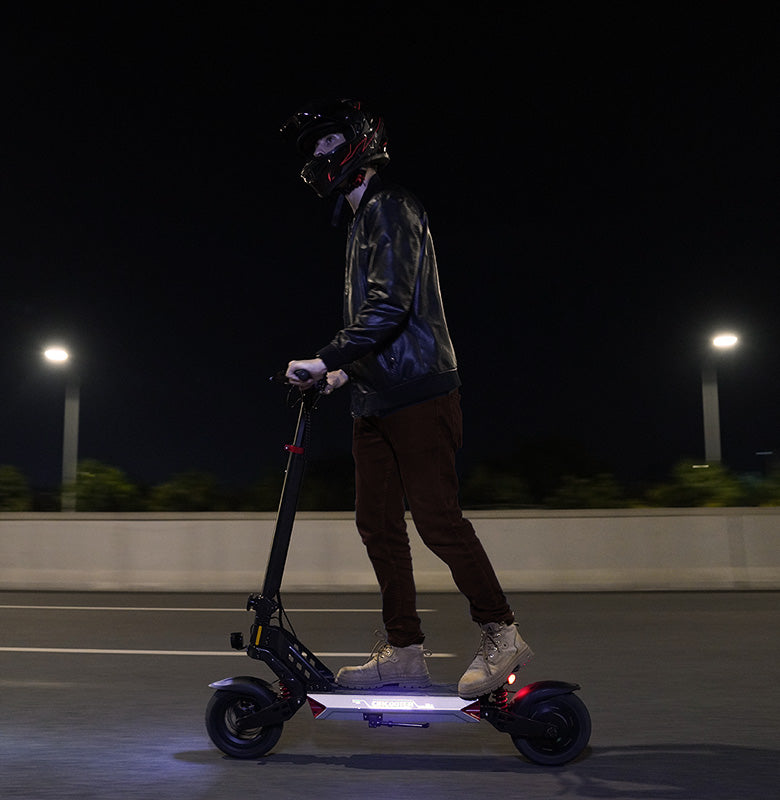
Night Riding Isn't Dangerous; Being Unprepared For It Is
There's a version of nighttime riding that's genuinely sketchy: no lights, full speed, unfamiliar dark road. And there's the version experienced riders do every day — deliberate, well-lit, controlled, on known routes. The difference is preparation.
Most nighttime e-scooter incidents trace back to one of three things: the rider wasn't visible, the speed was too high for the available light, or the rider wasn't reading the environment ahead. All are fixable.
What Changes After Dark

Visibility drops for everyone. Drivers have a narrower field of view, pedestrians may not see you approaching, and other cyclists may have no lights at all. You can't control that, so make yourself as visible as possible.
Obstacles are harder to spot until you're almost on top of them — potholes, gravel, wet drain covers all shrink your reaction window, especially at speed.
Depth perception and surface reading are also reduced, particularly on older Canadian streets with worn asphalt, painted crosswalks, and streetcar tracks in cities like Toronto, where surfaces behave differently once the sun's down.
Visibility: Being Seen Is Not Optional
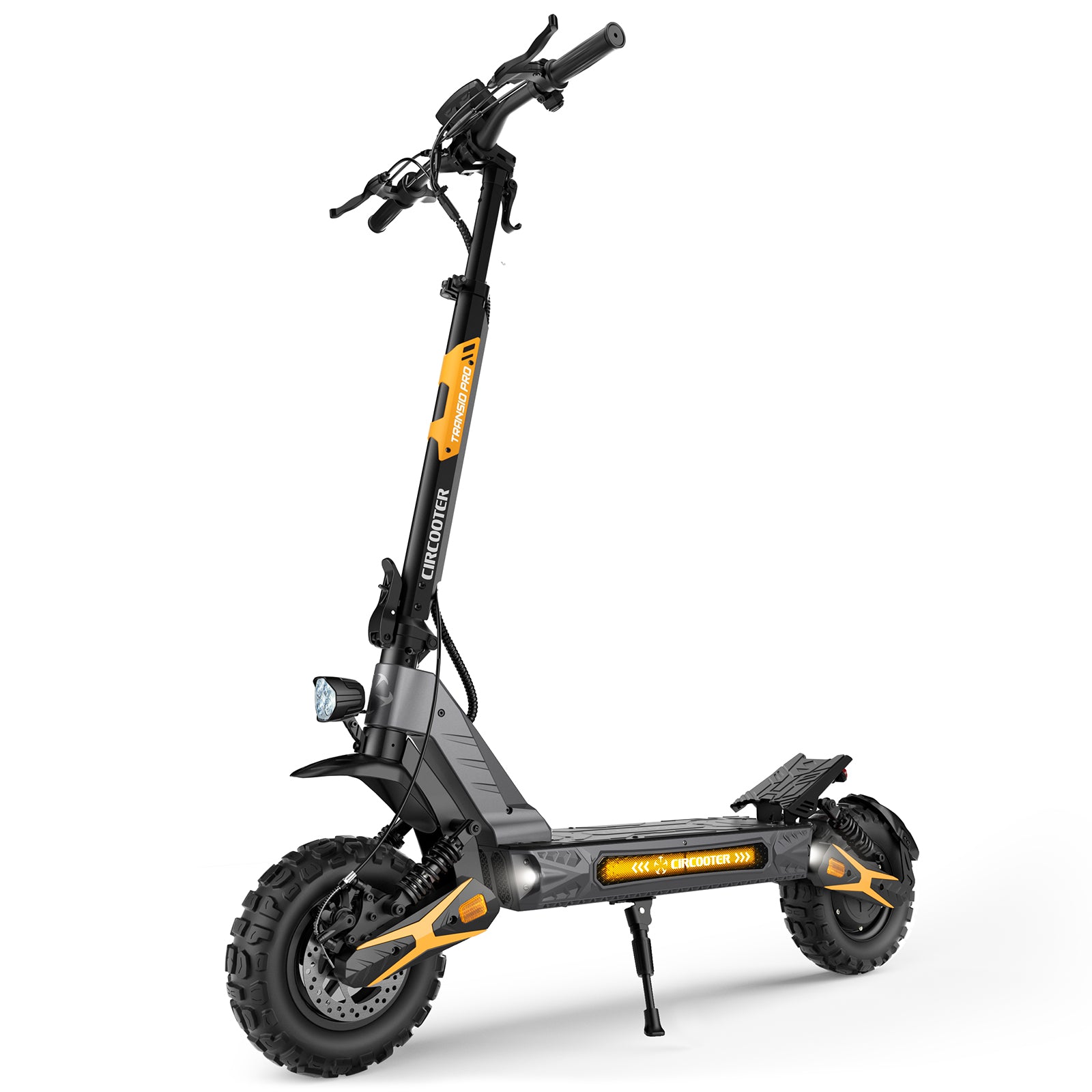
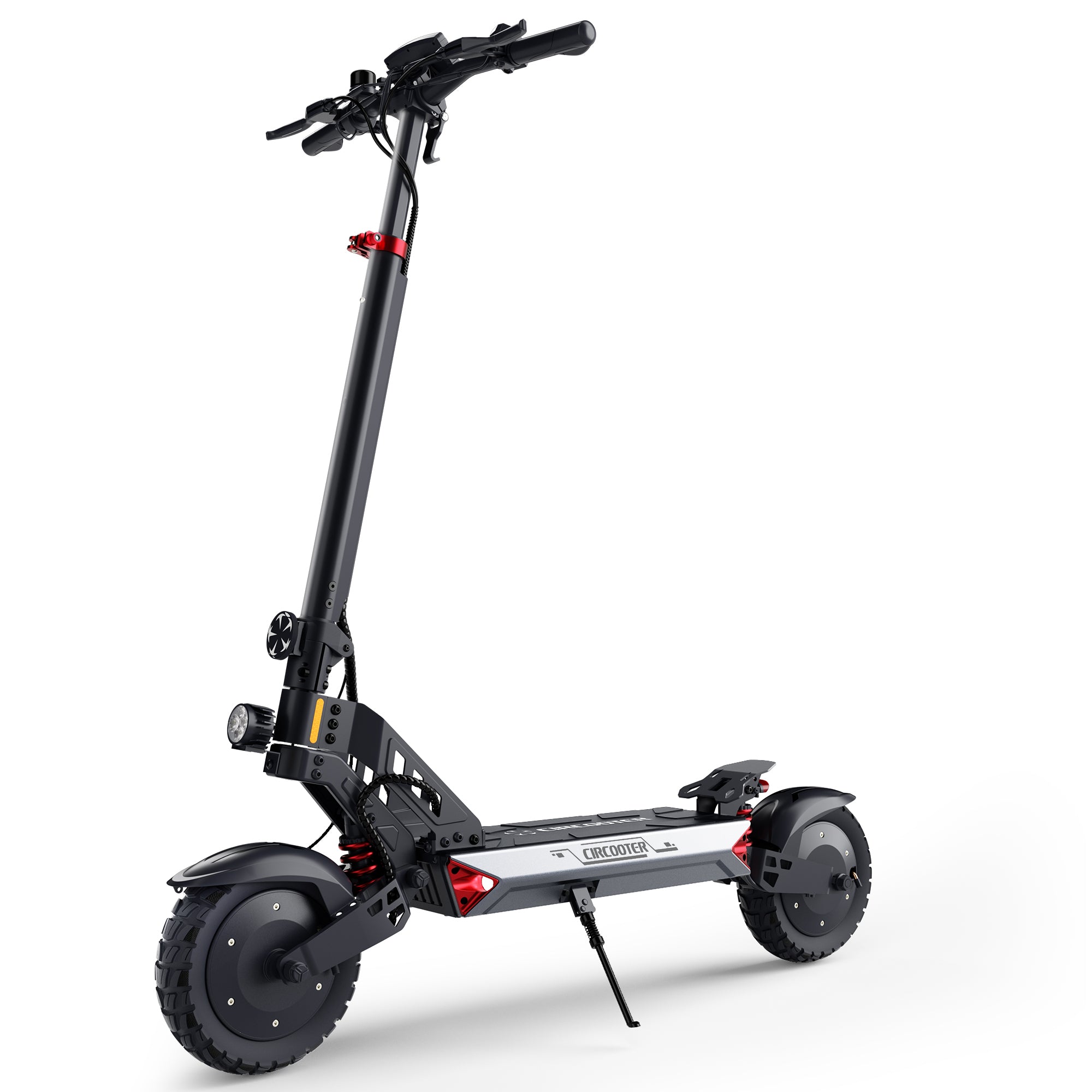
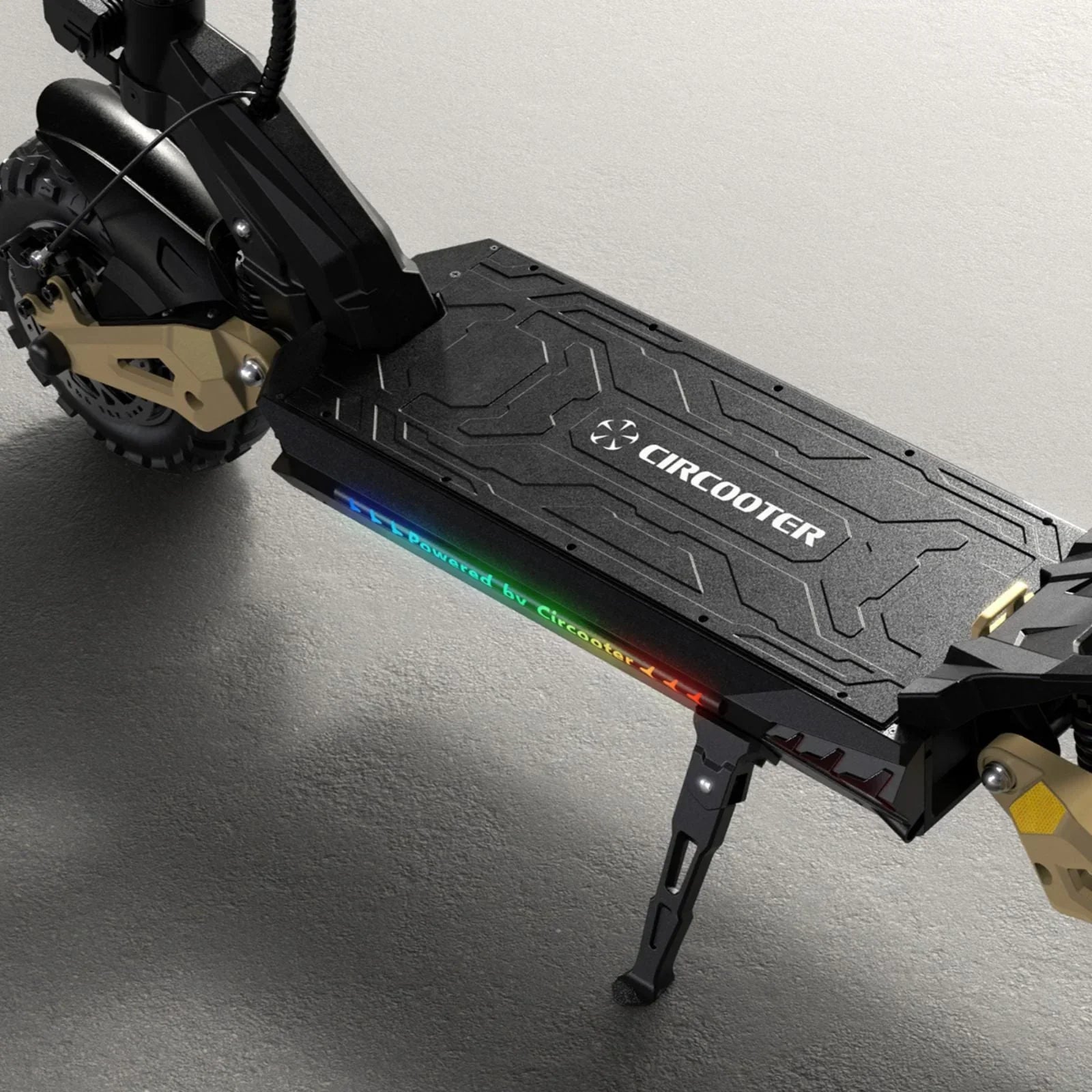
Your front light should do double duty: illuminate the road and make you visible to others. Aim for at least 200 lumens for low-speed urban riding, more for faster or darker roads. The Raptor Pro features a 360-degree system with dual headlights, side moonlights, turn signals, and brake-activated taillights.
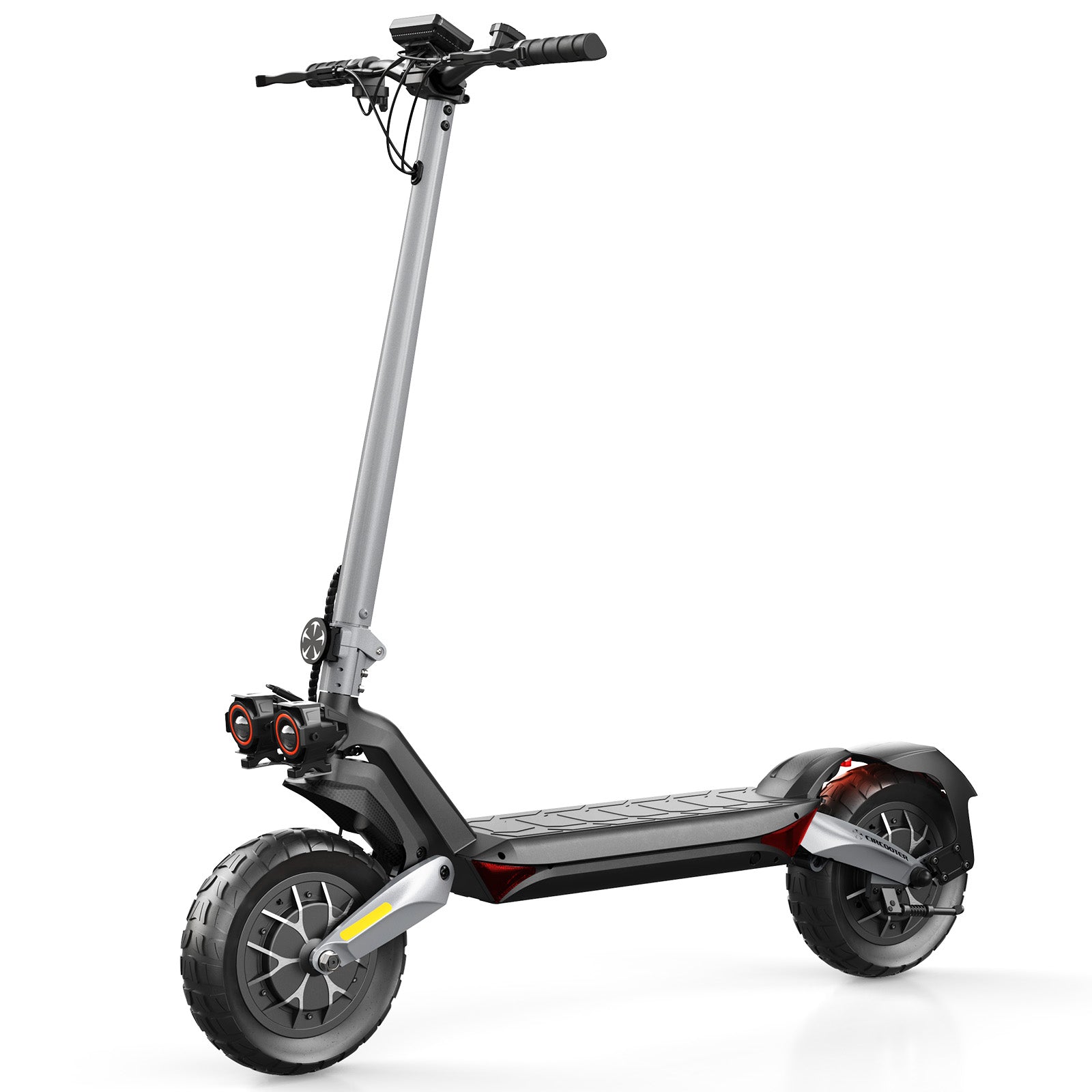
A rear brake light is one of the most underrated safety features on any scooter, it tells riders and drivers behind you that you're slowing down. The Landturbo Pro includes this as standard.
Reflective gear on your jacket, helmet, or backpack covers the angles your scooter's lights can't. This is worth prioritizing on darker stretches like Toronto's Don Valley trails or Vancouver's Stanley Park seawall after dusk. A light-colored, reflective helmet is one of the highest-impact single upgrades for night visibility.
Speed Management After Dark
Your safe night speed is whatever lets you stop within the distance your front light illuminates. That's roughly 20-24 km/h on lit streets and 13-16 km/h on darker, less familiar roads. At 32+ km/h in low light, you're relying on nothing being in your path, because you won't have time to react if something is.
Wet painted lines, metal grates, and manhole covers get more slippery after dark. Slow down before you're on them, not after. Circooter's electric scooter safety tips guide covers surface-specific braking in more detail.
Braking at Night
Stopping distance increases at night, and hazards are spotted later and surfaces are less predictable. Start braking earlier than feels necessary, especially approaching intersections or crossings, before you can confirm whether anyone's there.
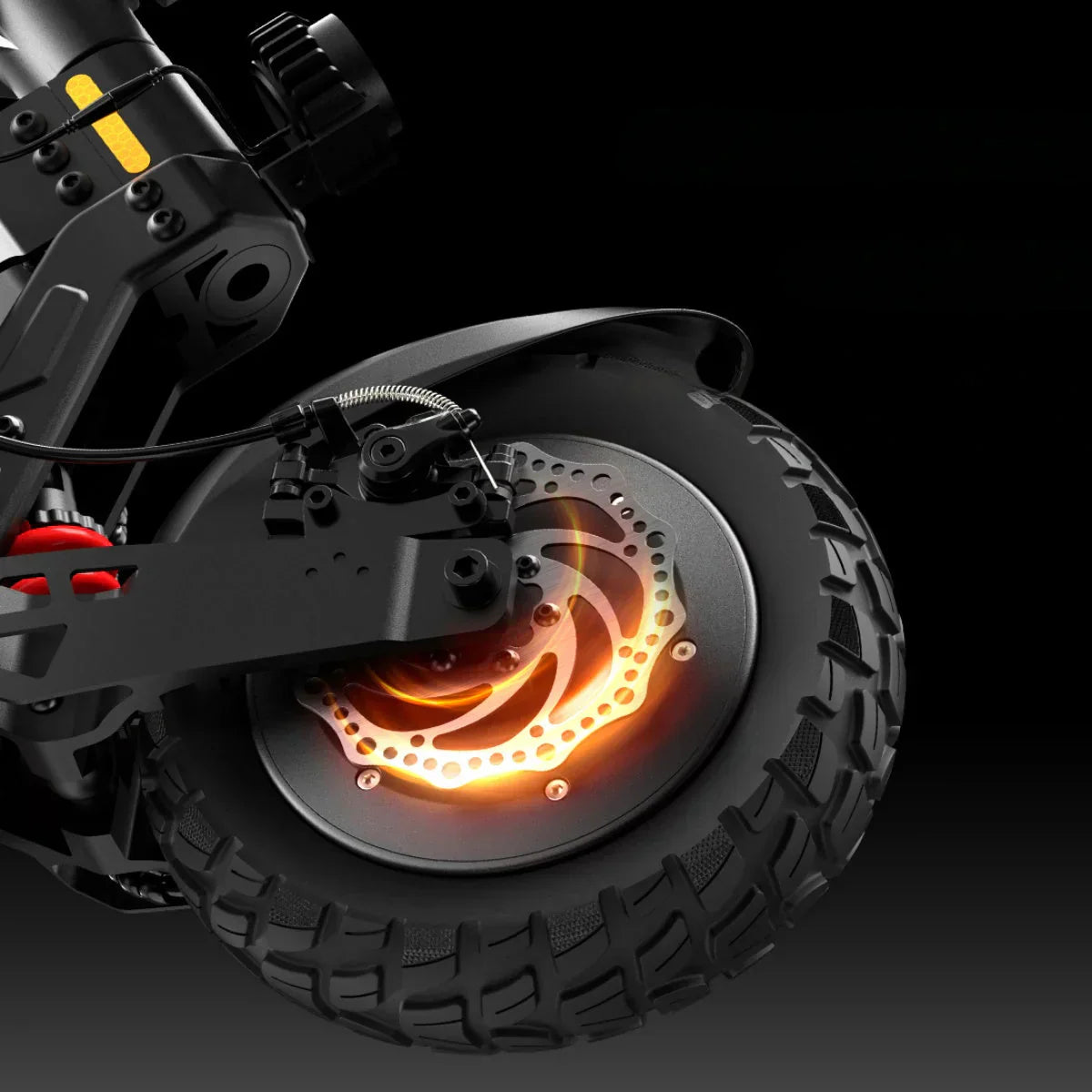
Hydraulic disc brakes, featured on the Raptor Pro and Cruiser Pro, deliver stronger, more consistent stopping power than mechanical brakes and perform more predictably when wet. Circooter's hydraulic vs. mechanical brakes breakdown explains why this matters most in demanding conditions.
Route and Environmental Awareness

Well-lit streets, like Toronto's Queen Street or Calgary's Stephen Avenue, extend your effective reaction window well beyond your headlight alone. Unlit roads narrow your world to your beam.
Familiar routes free up attention for reading the environment rather than navigating. Scout new routes in daylight first.
Most nighttime e-scooter incidents happen at intersections, usually when a turning driver doesn't see the rider. Slow down before every intersection, make eye contact when you can, and ride as if you might not be seen.
Rain reduces traction, extends stopping distances, and cuts your light's effective range. Light rain on a known, well-lit route is manageable on models with IPX4 water resistance. Heavy rain in unfamiliar or poorly lit areas calls for an alternate plan, especially once temperatures drop toward freezing, which comes early across much of Canada. Circooter's winter riding guide covers cold-weather traction and visibility.
The Pre-Ride Check
A 90-second check catches problems before they become real ones: test both brakes on flat ground, verify all lights work, check tire pressure by hand, and confirm battery charge is enough for your route plus a buffer.
Which Circooter Model Fits?
For regular night riders, the Landturbo Pro adds IPX4 water resistance, a high-contrast display, and 75 km of range. The Raptor Pro and Cruiser Pro offer maximum lighting coverage and hydraulic braking for any nighttime condition. Browse the full lineup on the Circooter electric scooters collection.
Riding Smart After Dark
Nighttime riding is a skill, not a setting. Riders who do it safely aren't fearless, they're methodical: checking equipment, choosing routes, managing speed relative to visibility, and staying present. Do that consistently, and night riding becomes routine instead of a source of anxiety.
What Riders Usually Ask
Does my Circooter's built-in lighting cover everything I need for night riding?
Yes, particularly on the Raptor Pro and Cruiser Pro. For darker roads, a supplementary handlebar light extends your range, and reflective gear covers the angles the scooter's lights can't.
What's the safest speed for night riding in a city?
13-19 km/h on lit streets, stretching to 24 km/h where lighting is strong. Drop lower on dark or unfamiliar roads.
Is riding in light rain at night safe on a Circooter?
Yes, on IPX4-rated models like the Landturbo Pro, Raptor Pro, and Cruiser Pro — but reduce speed, brake earlier, and avoid wet painted markings and metal surfaces.
Do I legally need lights on my e-scooter at night?
In most Canadian provinces and municipalities, yes. The practical standard is a white front light visible from 150 meters and a red rear light or reflector visible from 180 meters. Circooter's built-in systems meet or exceed this on all current models.
Can I add extra lighting to my Circooter?
Yes. A handlebar-mounted front light, clip-on rear lights, and reflective tire sidewall strips are all easy upgrades that extend the scooter's baseline coverage.

Laisser un commentaire
Ce site est protégé par hCaptcha, et la Politique de confidentialité et les Conditions de service de hCaptcha s’appliquent.