

What Beginners Actually Need First
When you're buying your first entry-level off-road electric scooter, the temptation is to chase the highest wattage or the longest range. Those specs matter but not exactly where beginners should start. What matters first is a scooter that's forgiving to learn on, capable enough for real off-road terrain, and built well enough to last past the first season. Get those three things right and everything else follows naturally.
Tires: The Foundation of Off-Road Capability
Nothing affects your off-road experience more directly than tires. It's the spec beginners most commonly underestimate, and the one that creates the biggest performance gap between a genuine off-road scooter and one that only looks the part.
What to look for:
- 10-inch pneumatic (air-filled) tires minimum. Pneumatic tires absorb impact through air compression, which keeps rides manageable on bumpy terrain. Solid tires transfer every jolt straight to the rider. On a packed dirt trail in Gatineau Park or the Laurentians, the difference is significant. On the rocky Canadian Shield terrain, it's the difference between controlled riding and survival mode.
- Off-road tread pattern. Deep, widely-spaced lugs channel loose material away from the contact patch and dig into soft surfaces for traction. A smooth commuter tread on gravel behaves very differently from an aggressive off-road tread on the same surface.
- Tire width. Wider tires provide a larger contact patch, which improves stability and traction. This is particularly relevant for beginners still building balance and control.
Suspension: What Makes Rough Ground Rideable
Suspension is the second feature beginners underestimate, and the one they notice most immediately once they're on a trail. Without it, every bump, root, and surface irregularity transfers directly through the frame to the rider. That's exhausting on a long ride, and it makes it harder to maintain the relaxed body position that good off-road technique requires.
For entry-level off-road riding, front suspension is the minimum. A front spring fork or swing arm absorbs the impacts that hit the front wheel first. Dual suspension, front and rear, handles more demanding terrain more comfortably, but front-only is adequate for beginners on moderate trails.
What good suspension enables for a beginner:
- More confident handling on uneven surfaces
- Less physical fatigue on longer rides
- Better wheel-to-ground contact, which improves traction and braking
- More forgiving recovery when you hit an unexpected bump
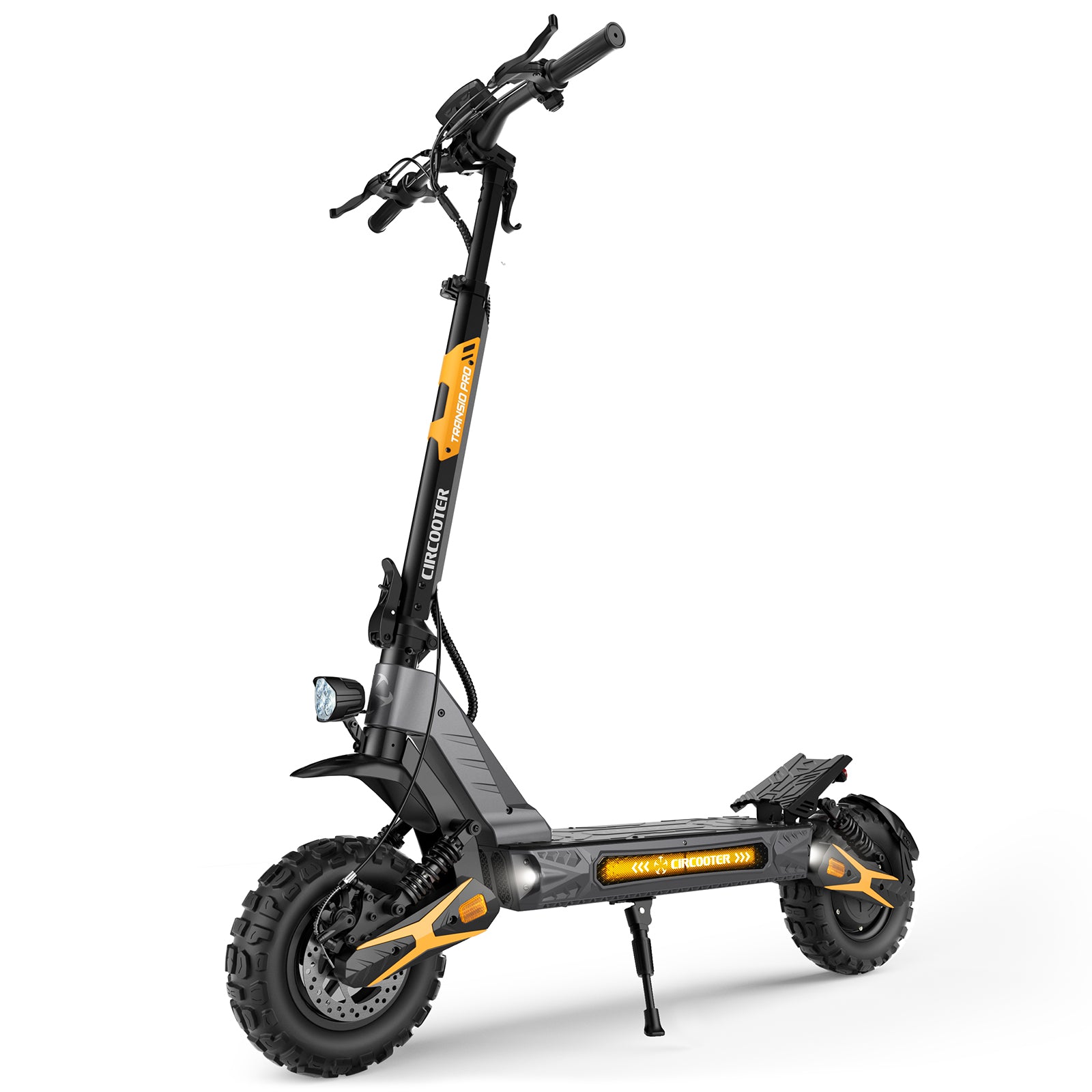
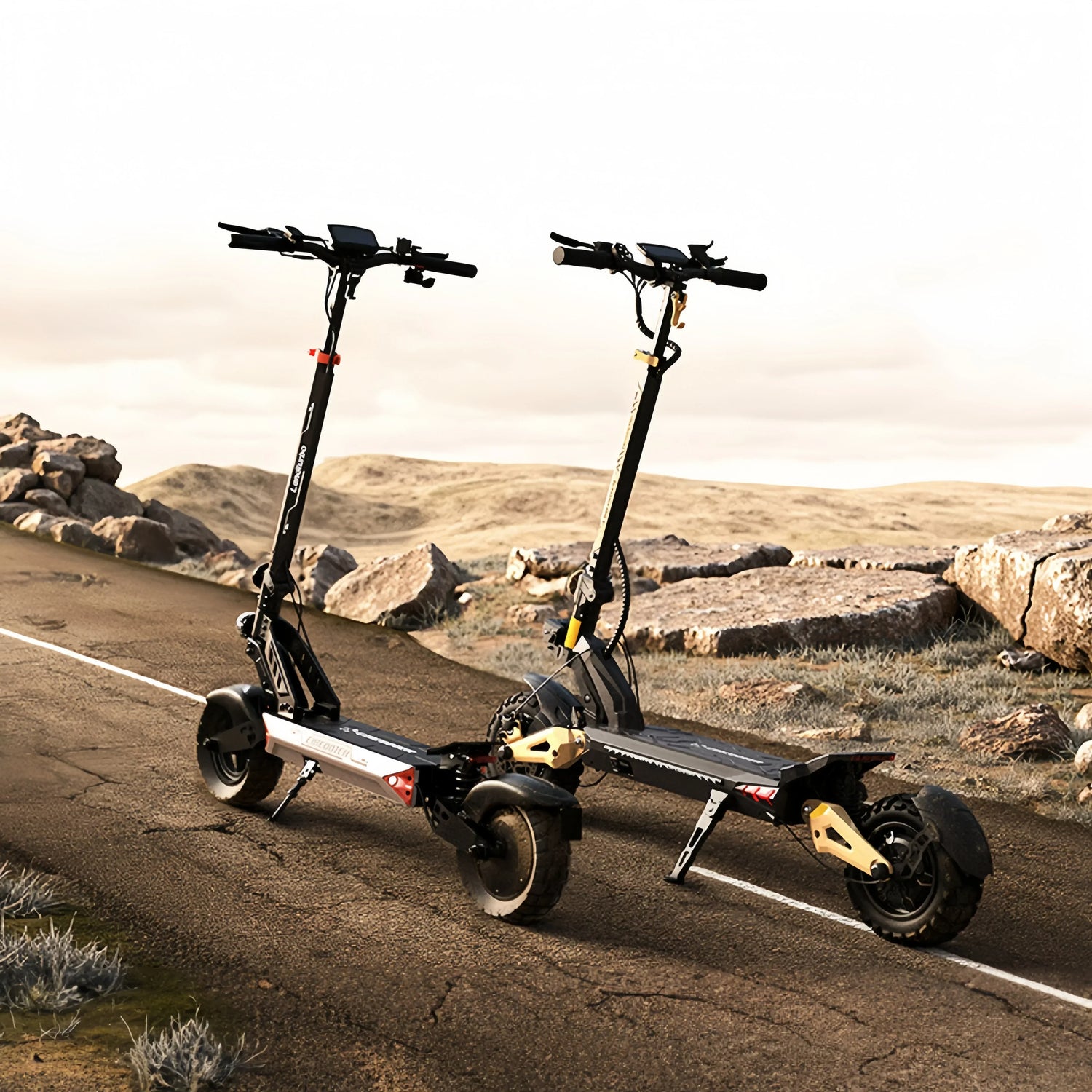
The Landturbo Electric Scooter (1000W, 45 km/h, 64 km range, $899) includes front swing arm suspension designed for mixed-terrain use. It’s the right starting point for beginners whose trails are primarily packed dirt, light gravel, and moderate campsite roads.
Motor Power: Enough, Not Maximum
Beginners don't need the most powerful motor available. They need enough motor to handle their actual terrain without straining and enough headroom that they're not constantly at the motor's ceiling.
For entry-level off-road use, a solid 1000W is the practical starting point. Here's what that covers in conditions:
1000W: The sweet spot for most beginner off-road riding. Handles grades up to 25%, maintains speed on moderate trails, and gives most rider weights comfortable headroom without hitting limits frequently. On typical trail surfaces, such as packed dirt, light gravel, forest paths, this is more than adequate for building skills and confidence. The Landturbo's 1000W motor covers this range confidently.
What beginners don't yet need:
- Dual motors - these add cost, weight, and power you won't use on beginner terrain
- 1600W+ - becomes relevant as skills develop and terrain ambitions grow into BC mountain trails or the rocky Canadian Shield sections
- Maximum hill-climbing specs - starting with more power than you need also adds weight, which affects portability and handling for riders still building technique
Braking: Non-Negotiable From Day One
Beginners focus on going. Experienced riders focus on stopping. The difference in mindset reflects the difference in how seriously each group takes braking systems. More often than not, the beginner perspective is the one that creates more incidents.
Off-road braking requirements:
Disc brakes minimum - drum brakes and rim brakes are inadequate for off-road conditions where surfaces are loose, wet, and unpredictable. Trail conditions, including early spring mud and post-rain gravel, demand braking systems that perform across variable surface types.
EABS (Electronic Anti-lock Brake System) - prevents wheel lockup on loose terrain, which causes skidding rather than controlled deceleration. For beginners who haven't yet built smooth progressive braking habits, EABS is a meaningful safety net, particularly on the downhill sections of forest trails.
Dual braking - front and rear working together. Using both simultaneously distributes stopping force more evenly and reduces the chance of either wheel locking up independently.
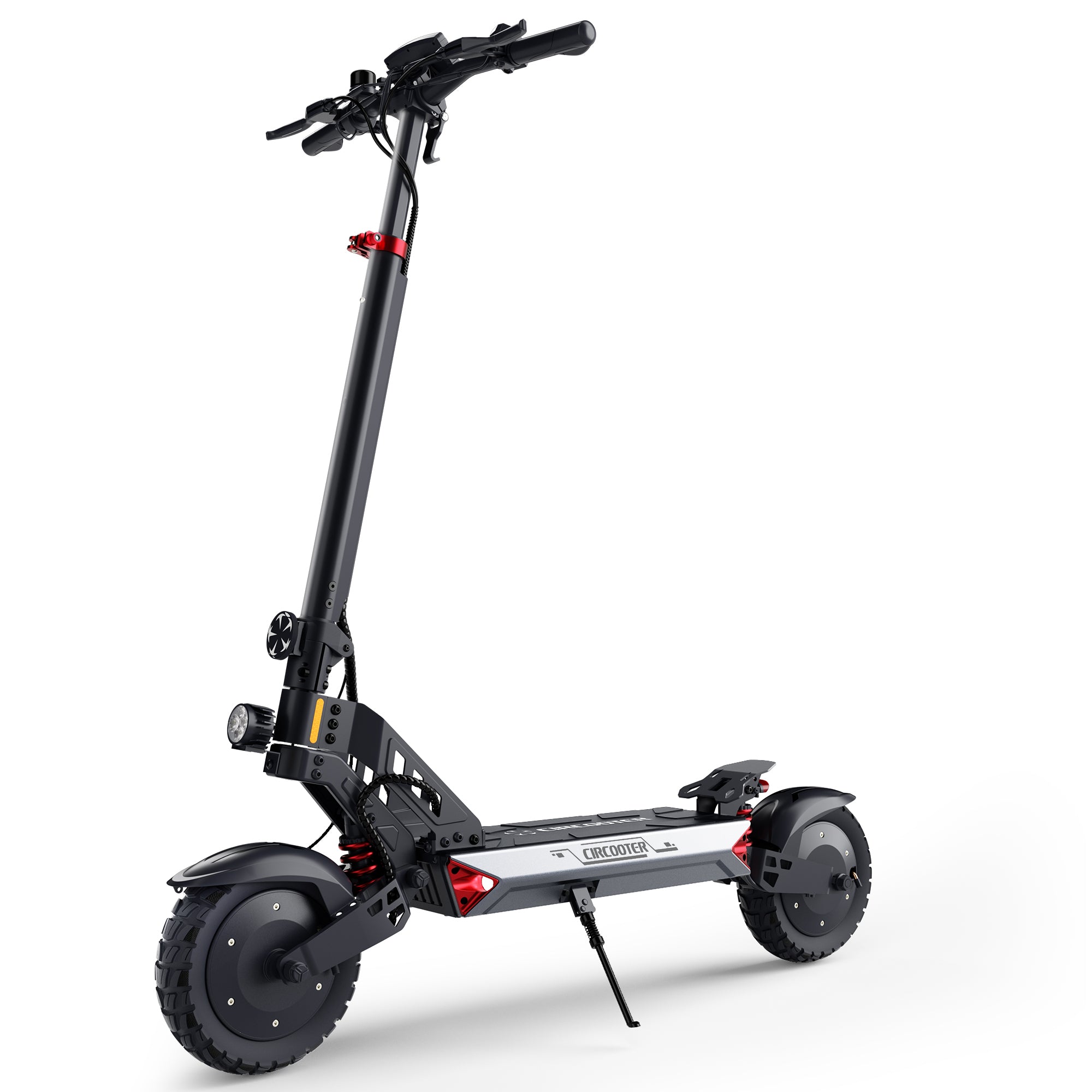
The Landturbo Pro Electric Scooter (1500W peak, 52 km/h, 75 km range, $949) upgrades to dual suspension alongside a stronger braking system. For beginners who want to start closer to intermediate capability on more varied terrain, it's a natural step up from the base Landturbo without jumping straight to dual motors.
Weight and Portability: More Important Than Beginners Expect
Beginners often don't think about portability until they're carrying their scooter up a flight of stairs or loading it into a car after a trail session in Kananaskis or Gatineau. Off-road scooters are inherently heavier than urban commuters because of larger tires, suspension components, and more robust frames. That weight varies enough between models to matter.
What to consider:
Folding mechanism quality - does it fold quickly and lock securely? A folding mechanism that requires effort or feels loose is a daily frustration.
Total weight vs. how often you'll carry it - if you're primarily riding to and from the trail, weight matters less. If you're combining trail riding with transit commuting, it matters significantly.
Weight capacity vs. your total load - beginner riders often forget to include gear weight in their calculation. Your body plus backpack plus equipment is your actual riding weight, and it should sit comfortably below the model's limit.
Features Beginners Should Deprioritize
Specs that can wait:
- Dual motors - add cost, weight, and power you won't use on beginner terrain; the Raptor Pro (1600W, 90 km range, $1,199) is the right model when your riding genuinely demands it, not as a starting point
- Maximum top speed - beginners should be building technique at moderate speeds; 45 km/h is already more than enough for learning proper off-road form
- 90 km rated range - most beginner trail sessions in Canada are under 25 km; extra range capacity adds battery weight without practical benefit at this stage
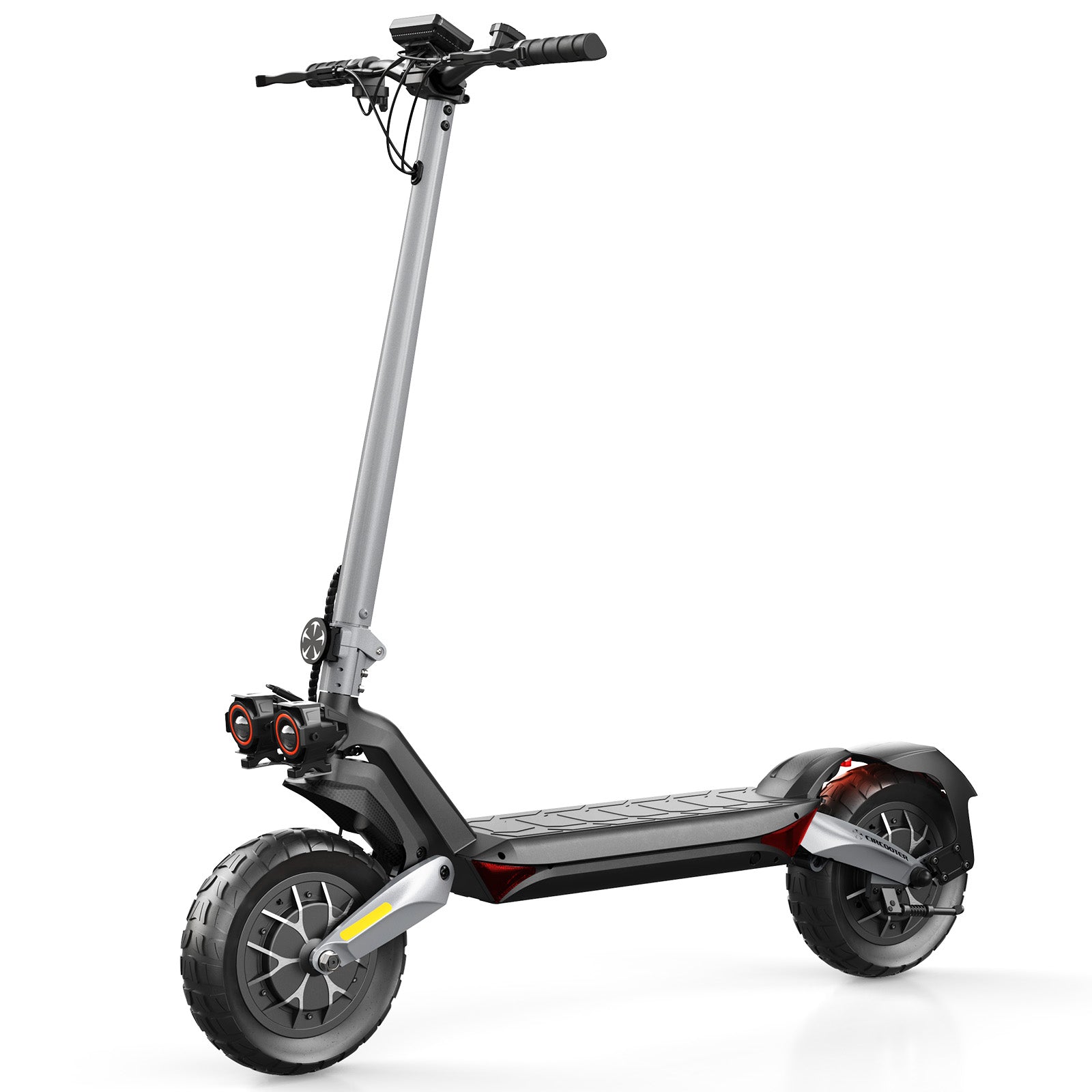
- High-performance dual motor models - the Landturbo Pro (1500W, 75 km/h, $949.00) is a genuinely capable machine, and one that rewards riders who already have the skills to use it properly
What matters more than spec numbers:
- Build quality and frame integrity for conditions
- Brake system reliability on variable surfaces
- Tire quality and tread for mixed terrain
- Suspension that actually works, not just the presence of a spring
Build the Foundation Right, Then Grow From There
Entry-level off-road riding is where habits form. A scooter that's forgiving, well-specced for moderate terrain, and genuinely reliable builds the right foundation — confident enough in the hardware to focus on technique, not constantly managing a scooter that's either too limited or too powerful for where you are in your skills.
Once your skills develop and your trail ambitions grow into BC mountain tracks, Rockies fire roads, or technical Quebec singletrack, the progression to the Raptor Pro makes sense. But that upgrade means far more when you've built the skills to use it. The Landturbo and Landturbo Pro cover the full beginner-to-intermediate range — and for most riders starting out, that range is more than enough to build genuine off-road competence.
Frequently Asked Questions
What's the most important feature on an entry-level off-road electric scooter?
Tires. Good 10-inch pneumatic off-road tires improve grip, comfort, and control far more than extra motor power.
Is 1000W enough for off-road riding as a beginner?
Yes. A 1000W motor is enough for packed dirt, gravel, and moderate hills without being too aggressive for beginners.
Do I need dual suspension on my first off-road scooter?
Not always. Front suspension is enough for light trails and gravel, while dual suspension is better for rougher terrain.
How much should I spend on a beginner off-road e-scooter?
The $899 to $949 CAD range covers the Landturbo and Landturbo Pro both provide proper tires, suspension, disc brakes, and enough power for beginner to intermediate trail riding.
Can I use an entry-level off-road scooter for city commuting?
Yes — off-road scooters handle city streets well, including the potholed and frost-heaved pavement common in cities like Ottawa and Winnipeg, making them a practical dual-purpose choice.

Laisser un commentaire
Ce site est protégé par hCaptcha, et la Politique de confidentialité et les Conditions de service de hCaptcha s’appliquent.