


Why Off-Road Riding Is Different
If your e-scooter experience so far has been city streets and bike lanes, your first time on a dirt trail or gravel path will feel noticeably different. Surfaces shift unpredictably, obstacles appear with less warning, traction changes from one meter to the next, and hills demand more from your motor and your judgment. None of this makes off-road riding dangerous for beginners — it just rewards preparation more than urban riding does.
Get the Right Gear First
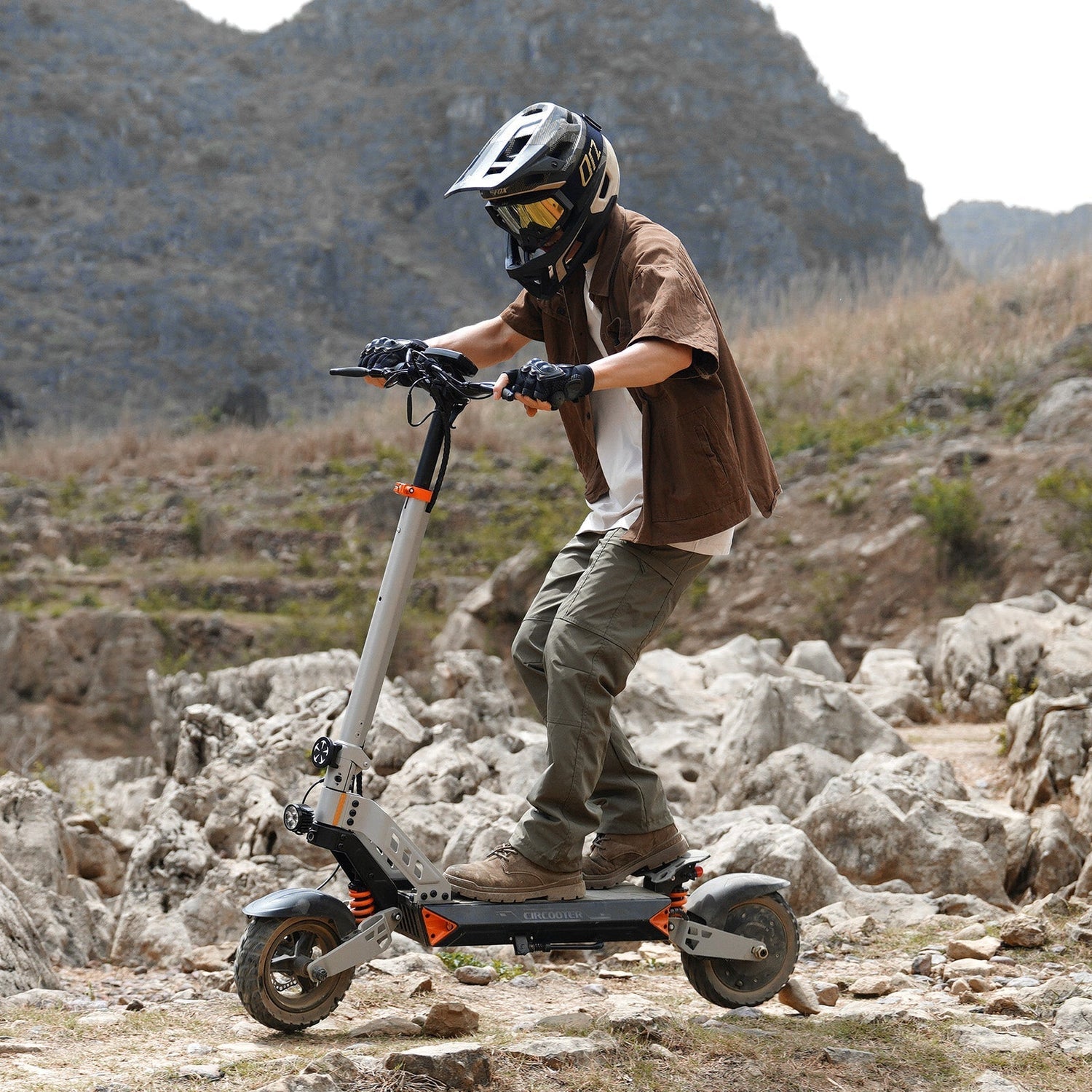
Off-road falls happen differently from city falls due to harder surfaces and less predictable conditions. A full-face helmet protects your chin and jaw in a way open-face helmets don't — studies consistently show helmets reduce head injury risk by close to 70%. Add hard-shell knee and elbow pads, gloves with knuckle and palm protection, closed-toe shoes with ankle support, and goggles or wraparound eyewear to protect against dust and debris.
Circooter's electric scooter safety guide covers full gear selection and is worth a read before your first trail session.
Foundational Riding Technique

Body position is your primary suspension.
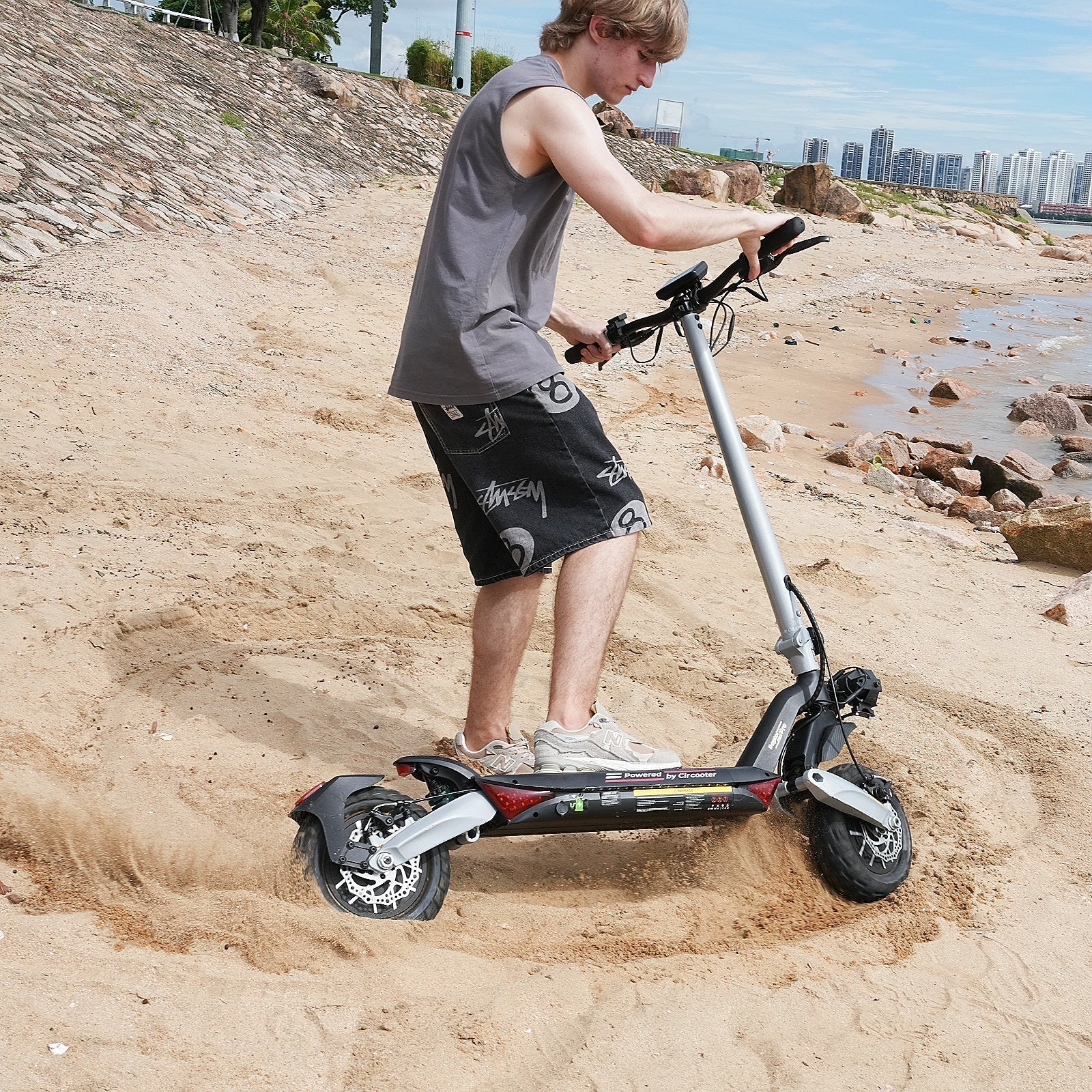
Stand with feet firmly on the deck, knees slightly bent, elbows soft. Bent knees absorb impacts the scooter's suspension doesn't eliminate.
Shift weight deliberately on grades.
Lean slightly forward uphill to keep the front wheel planted; shift back on downhills to keep weight over the rear wheel and manage your braking.
Look 10-15 meters ahead.
Not at the ground in front of your wheel. At 16-24 km/h, you cover several meters in less than a second; this single adjustment makes the biggest difference for new off-road riders.
Use smooth, progressive inputs.
Gradual throttle, early gentle braking, and body-weight steering rather than sharp handlebar input. Off-road surfaces punish sudden demands but reward measured control.
Speed Management on Rough Terrain
-
Packed dirt and light gravel: 13-19 km/h is a comfortable learning range.
-
Rocky or loose sections: 8-13 km/h, sometimes slower.
-
Downhills: always slower than the equivalent uphill, since braking distance increases on loose ground.
How to Read and Ride Different Surfaces
Packed dirt
The most forgiving surface and the right starting point because it is predictable, with decent traction when dry.
Gravel
Looks stable and often isn't. It shifts under your wheels on turns and braking. Keep speed steady, brake in straight lines before corners, and avoid sharp direction changes.
Circooter's guide to urban vs. trail riding covers surface-specific technique for routes like the gravel fire roads in Gatineau Park or the North Shore trails outside Vancouver.
Rocky terrain
Requires deliberate navigation. Know how to slow down early, pick your line through clusters of rocks rather than reacting to each one, and let the suspension do its job.
Wet and muddy surfaces
Dramatically reduce traction on every terrain type; expect braking distances to roughly double. Avoid painted surfaces and anything polished-looking. For new riders, wet trails are genuinely better ridden another day, especially once fall temperatures drop and conditions turn icy in places like Kananaskis Country. Circooter's winter riding guide covers traction management in detail.
Braking Off-Road: What's Different

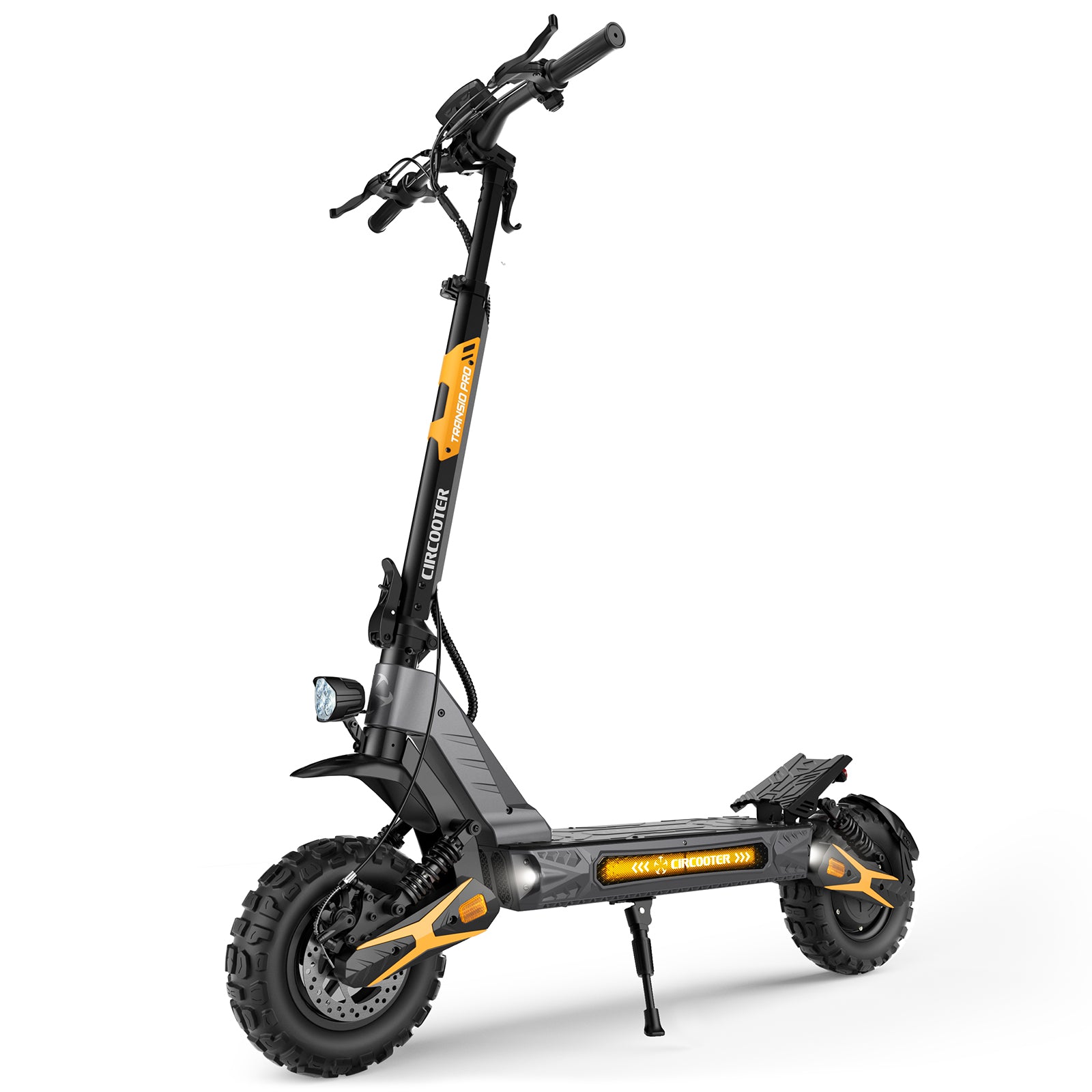
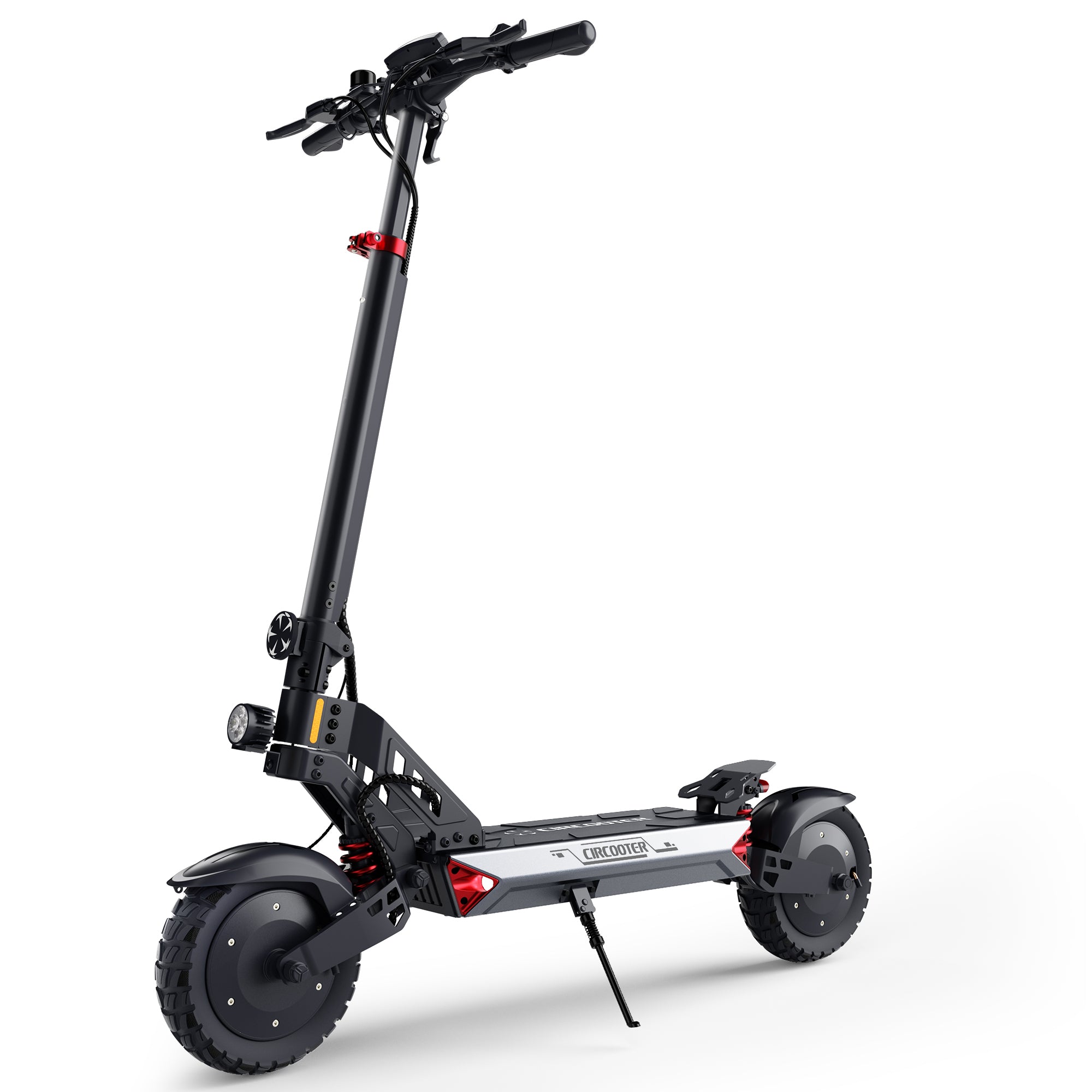
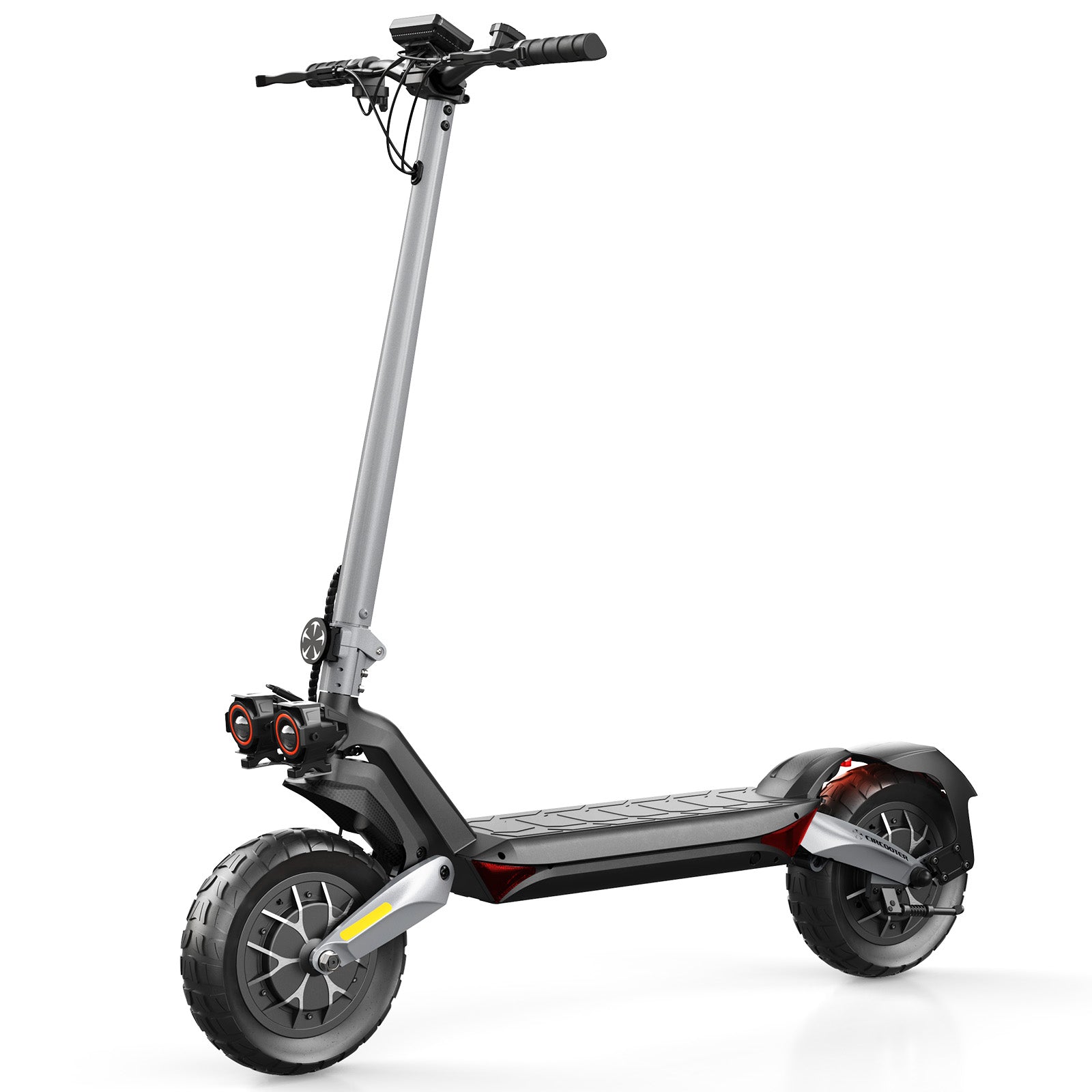
Use both brakes together. Front and rear working simultaneously distribute braking force evenly and prevent either wheel from locking up alone. The Landturbo and Landturbo Pro use disc brake systems with EABS (Electronic Anti-lock Brake System), maintaining rolling contact through controlled braking rather than a locked skid. On downhills, use steady, light brake pressure rather than building speed and braking hard.
Circooter's hydraulic vs. mechanical brakes breakdown explains why hydraulics, standard on the Raptor Pro and Cruiser Pro, perform more consistently in these conditions.
Pre-Ride Checklist
Check tire pressure by firm hand pressure before every session because underinflated pneumatic tires lose shock absorption and risk pinch flats on sharp rocks. Test both brakes independently, rolling forward slowly. Off-road riding drains batteries 20-30% faster than flat urban riding, so account for that against your planned distance; a 16 km round trip on a scooter rated for 40 km on flat ground needs a real buffer. Finally, give the frame a firm shake and check the folding mechanism, collar, and handlebar clamp with the included hex wrench, since trail vibration loosens bolts urban riding leaves untouched. Circooter's maintenance guide covers the full inspection routine.
Building Skills the Right Way
-
Sessions 1-3: Flat, packed dirt or light gravel. Focus entirely on body position, smooth throttle, and braking distance.
-
Sessions 4-8: Introduce gentle inclines, practice weight shifting and downslope braking at conservative speeds.
-
Sessions 9+: Add surface variety, gravel, brief rocky stretches, mixed terrain, to test your foundational skills across different feedback conditions.
Browse the full off-road lineup on the Circooter electric scooters collection.
What Beginners Usually Ask
Do I need a special scooter to ride off-road, or can I use my commuter model?
If your commuter model has large pneumatic tires and basic suspension, it can handle mild mixed terrain. For anything beyond packed dirt paths, a purpose-built model like the Raptor Pro is necessary. Commuter models without proper tires and suspension weren't engineered for those forces.
What's the most important technique to learn first?
Keep your knees slightly bent and stay relaxed rather than rigid. This affects balance, shock absorption, steering response, and fatigue.
How do I know when I'm ready to ride harder trails?
When the basics feel automatic, such as body position, smooth braking and throttle, and reading 10-15 meters of terrain ahead without anxiety.
Is it normal for the scooter to feel unstable on gravel?
Yes, especially at first. Loose material between tire and ground reduces traction. Reduce speed, avoid sharp inputs, and brake in straight lines before turns.
What should I do if I feel like I'm losing control?
Don't grab both brakes hard at once. Ease off the throttle, apply gentle progressive braking, and lower your centrer of gravity by bending your knees more. If you do fall, let it happen rather than fighting it.

Laisser un commentaire
Ce site est protégé par hCaptcha, et la Politique de confidentialité et les Conditions de service de hCaptcha s’appliquent.