


Your Next Campsite Companion Runs on Electricity
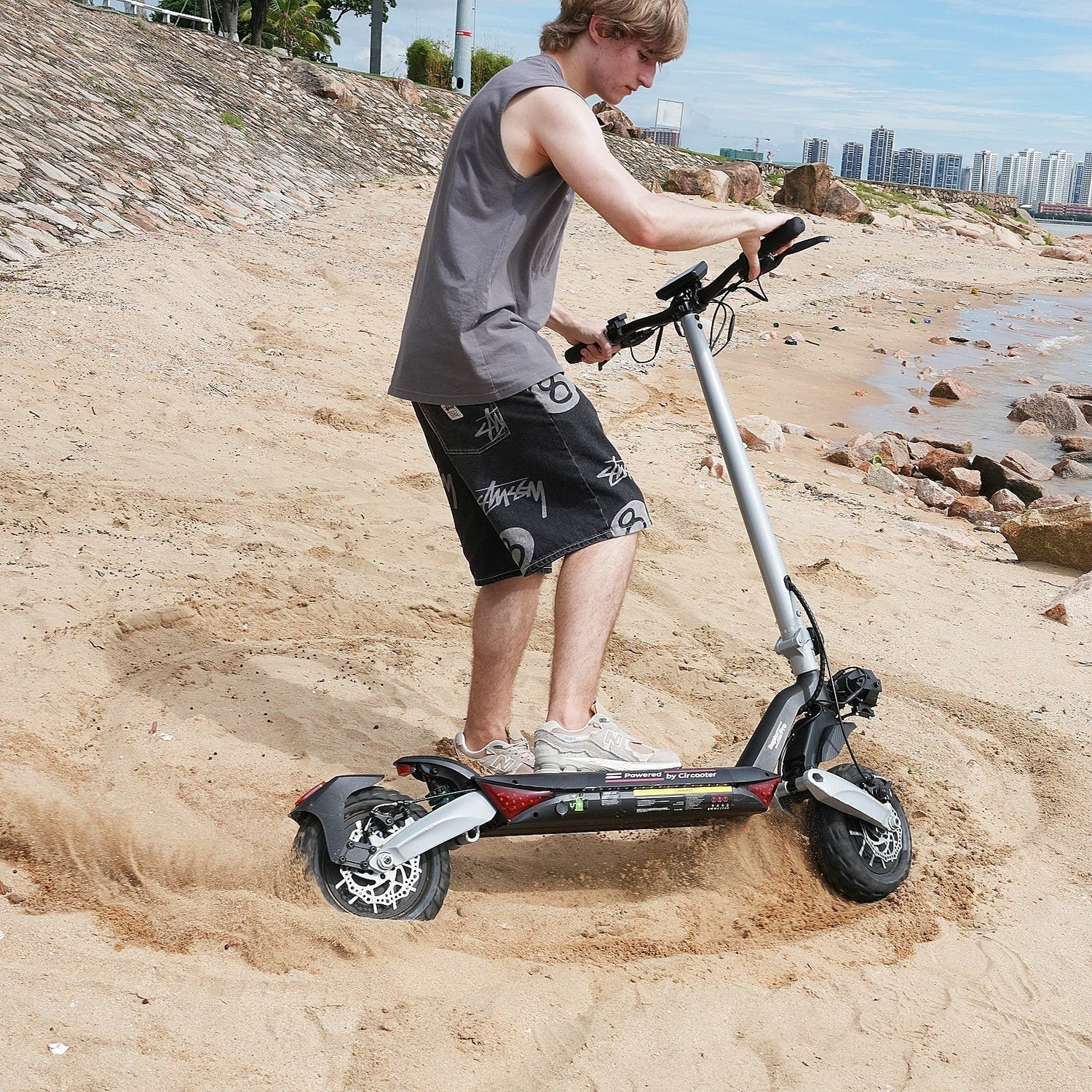
If you've ever tried navigating a campground, fire road, or dirt trail on a standard commuter scooter, you already know how quickly the experience falls apart. Narrow tires sink into soft ground, rigid frames transmit every stone and root directly into your hands, and underpowered motors bog down on inclines that would barely register in a car. Canada's campsite environments demand hardware that's actually built for the job.
Here's what separates a capable dirt road and campsite scooter from one that just looks like it belongs outdoors.
Tires: The Feature That Determines Everything Else

On dirt roads and campsite terrain, tires are the foundation. Everything else, motor power, suspension, even braking, performs better or worse depending on what's happening at the contact patch between tire and ground.
Size and Construction
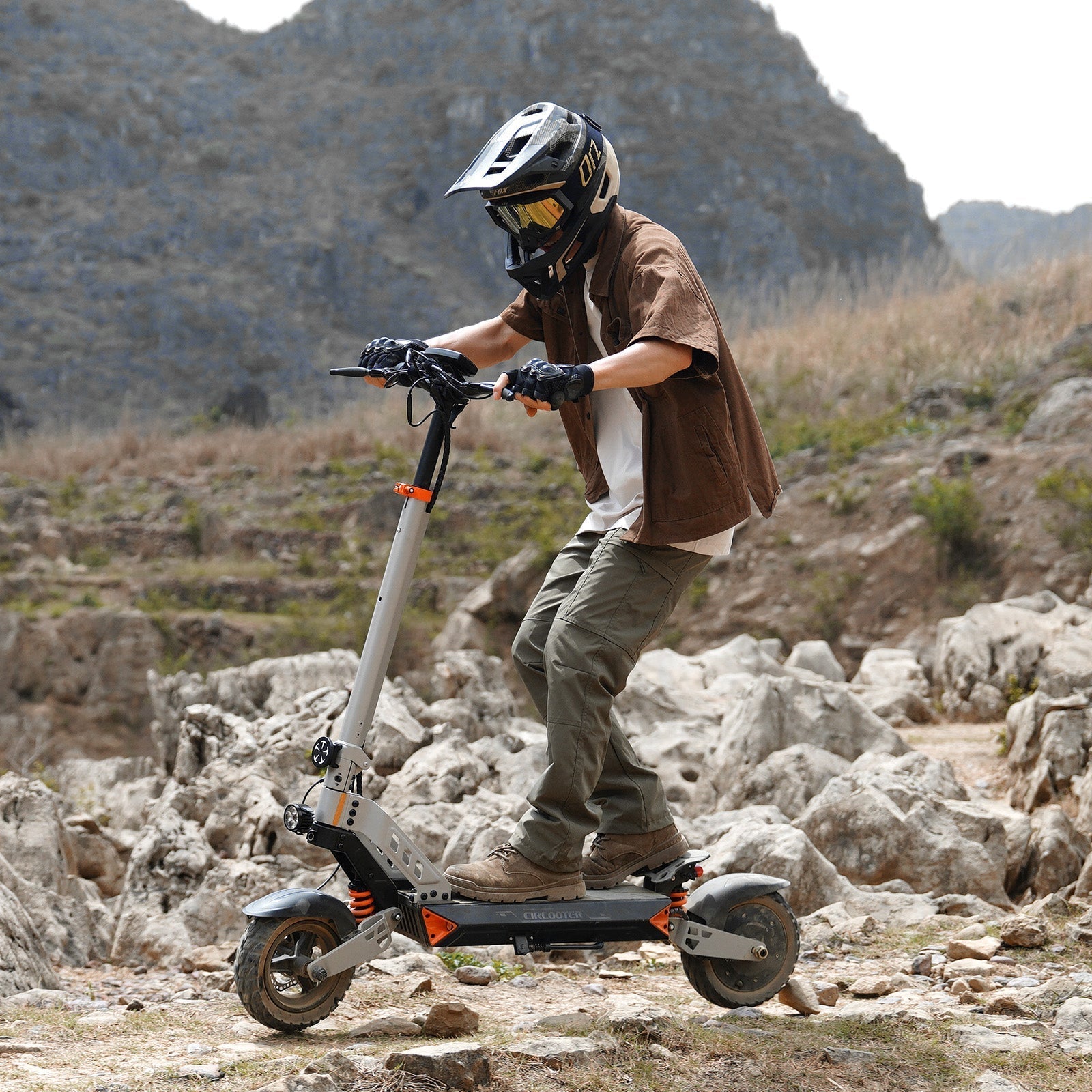
Large pneumatic tires (10 inches or bigger) are the minimum for dirt roads and campsite use. Their larger diameter rolls over obstacles more smoothly, and the air-filled construction absorbs impact through compression rather than transmitting it rigidly through the frame.
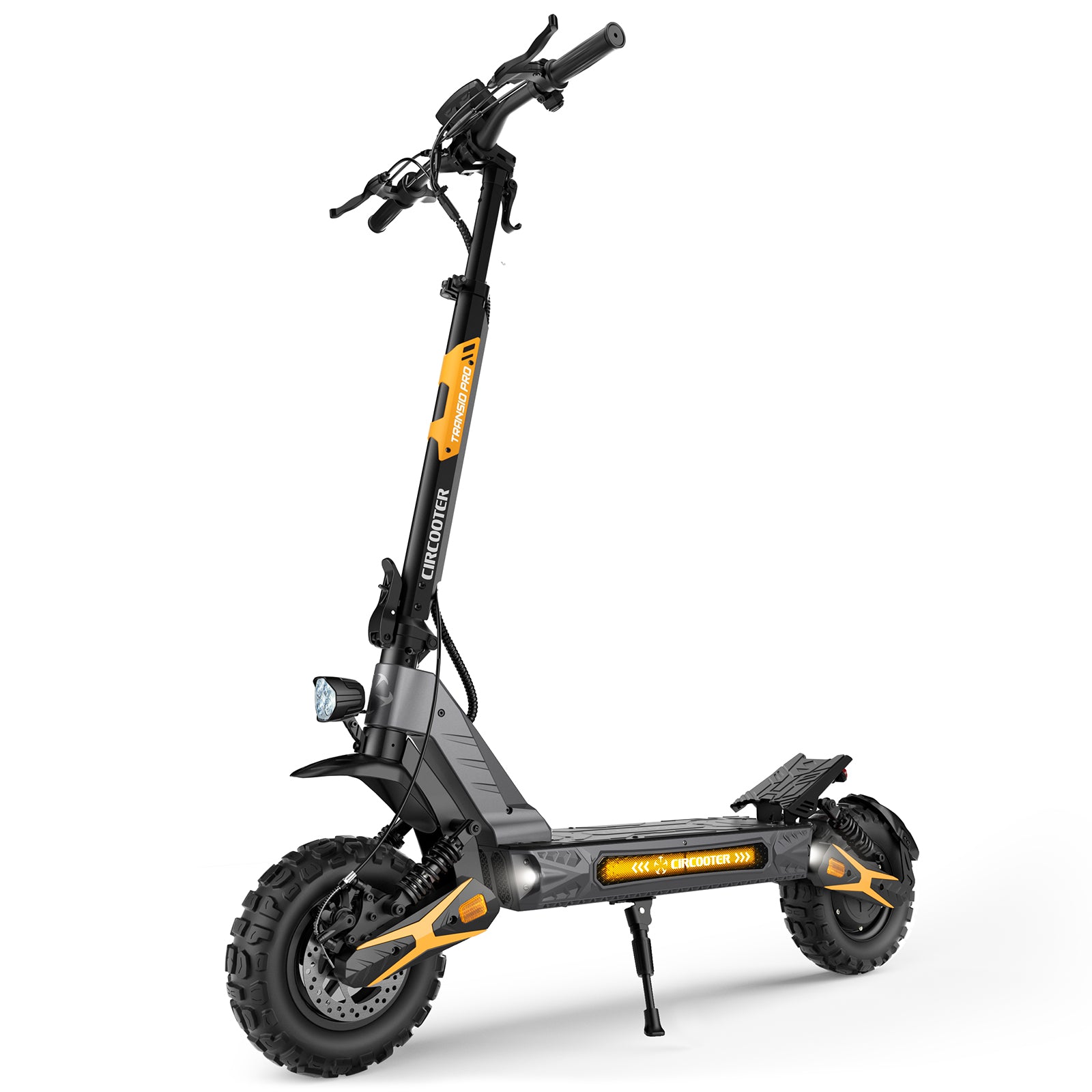
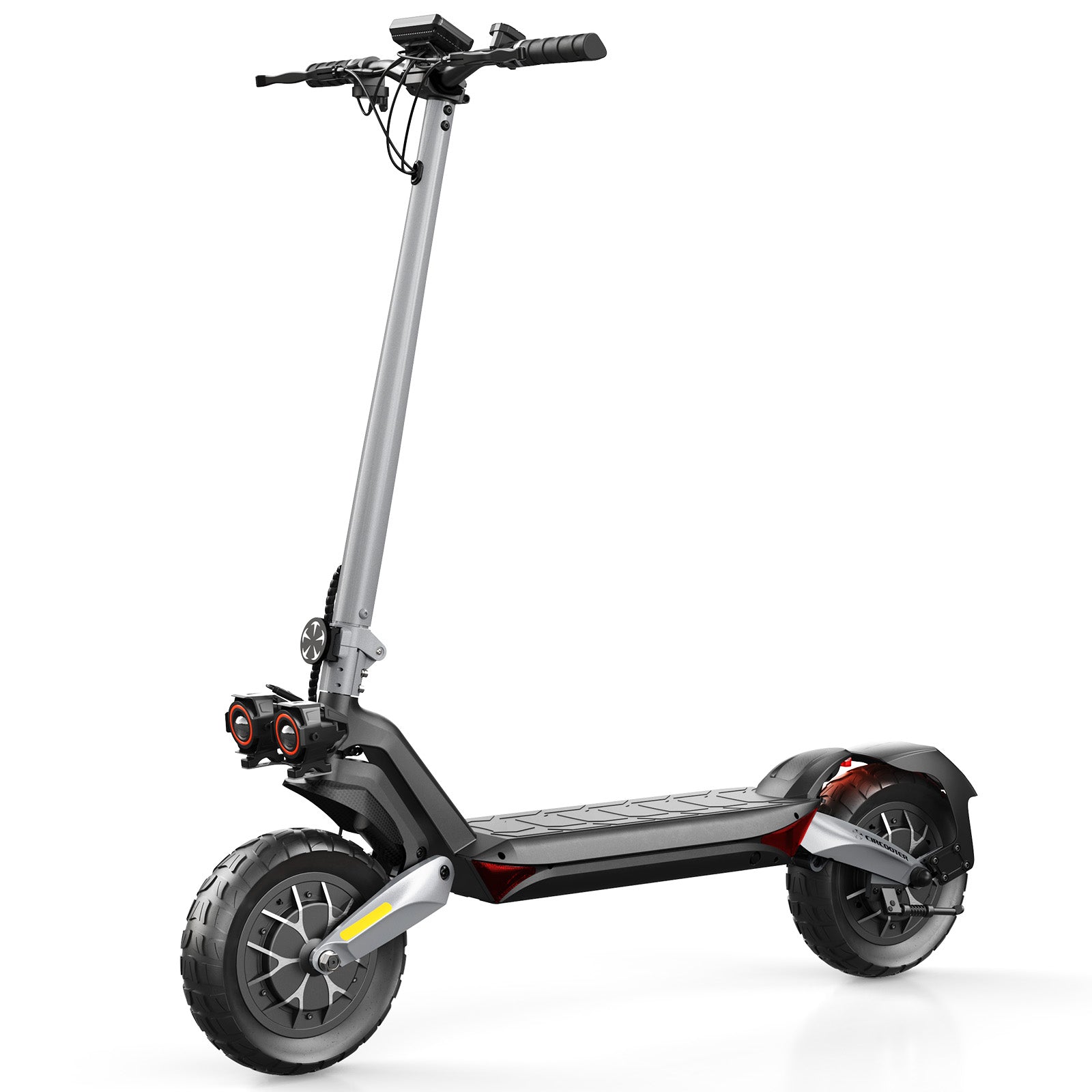
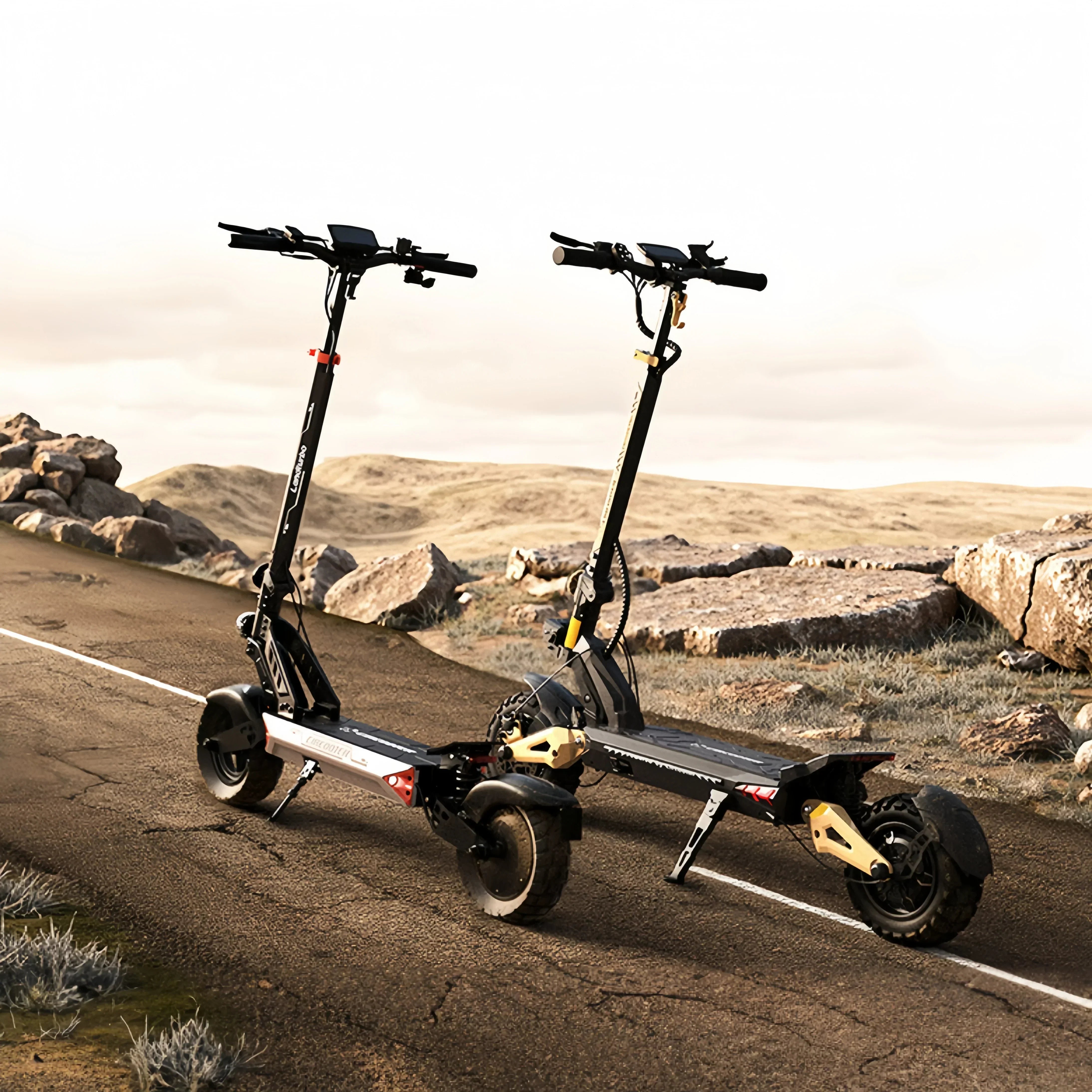
The Landturbo Electric Scooter runs a 1000W motor at 45 km/h with a 64 km range — and its pneumatic tire setup handles the mixed packed-dirt and gravel conditions common on campsite fire roads without the harsh feedback that solid tires transmit.
Tread Pattern
Off-road tread with widely spaced, deep lugs is what keeps you moving on loose dirt. The lugs dig into the surface and push material rearward for traction, while the spacing prevents the tire from packing full of dirt and losing grip. Smooth commuter tread on a dirt campsite road behaves nearly like bald tires on wet pavement.
Suspension: What Keeps the Ride Controlled Off Pavement
Campsite terrain is relentlessly varied. A fire road that looks smooth from a distance has ruts, rock edges, and surface transitions that appear constantly. Without suspension, the scooter communicates all of it directly to the rider, creating fatigue and reducing control.
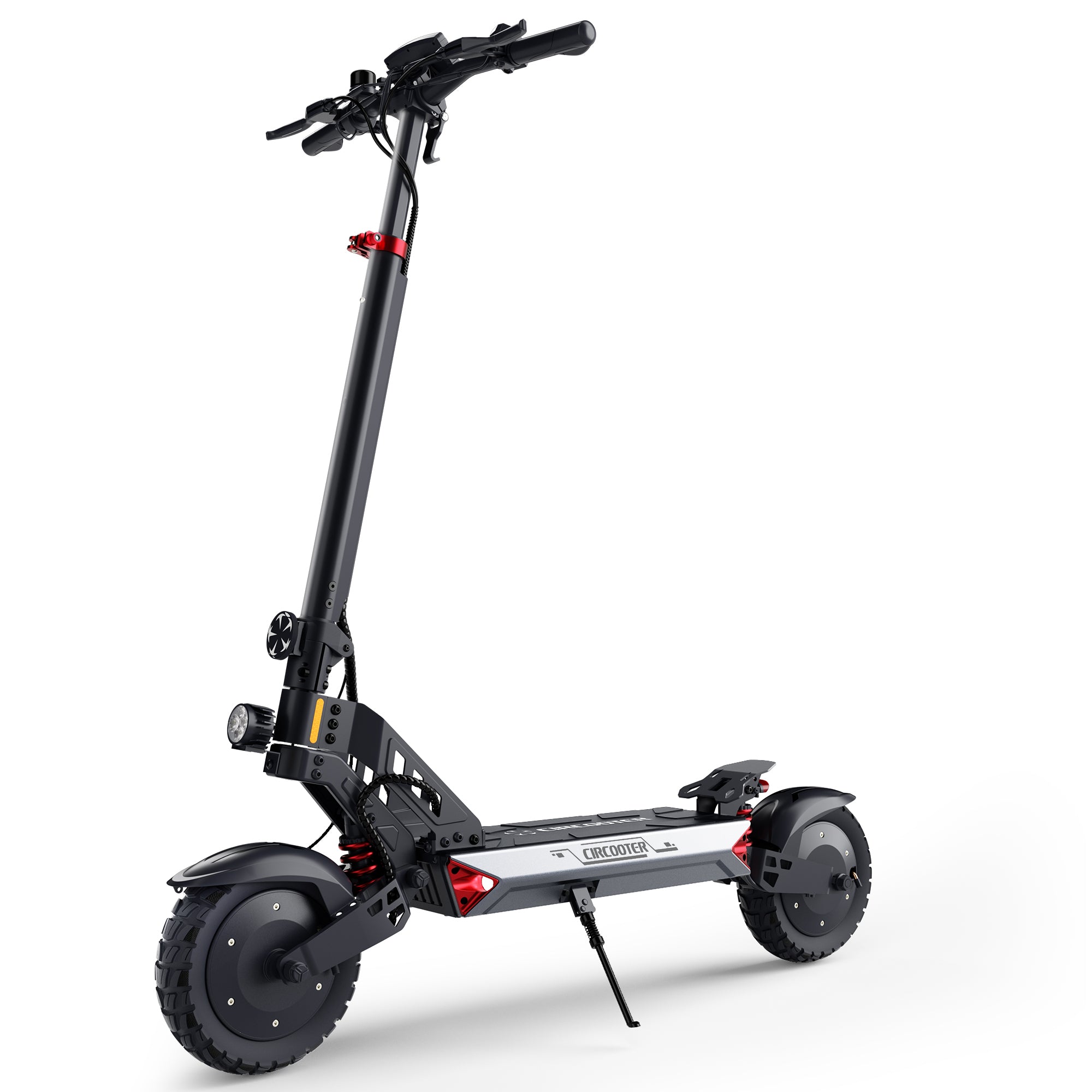
Circooter's swing arm suspension design maintains consistent wheel-to-ground contact on uneven surfaces rather than bouncing off obstacles. Dual suspension is the right setup for serious dirt road use. Both wheels absorb impacts independently, which matters when the rear wheel hits a rut the front is already cleared.
The Landturbo Pro Electric Scooter (1500W peak, 52 km/h, 75 km range, $949) brings dual suspension alongside a powerful peak motor specifically for city streets during the week and dirt roads and campsite exploration on weekends — Circooter's own Landturbo Pro launch article describes it as built for exactly this use case: "Beyond Streets, Beyond Limits."
Motor Power: Enough Torque for Unpaved Terrain
Dirt roads and campsite environments are rarely flat. Fire road grades, soft uphill sections, and the constant rolling resistance of loose ground all demand more from a motor than urban pavement does.
Motor requirements by terrain type:
-
Light campsite paths and packed dirt fire roads: 1000W handles this well for most rider weights
-
Loose dirt, rutted roads, and moderate grades: 1250W+ provides the torque headroom to maintain speed without straining
-
Steep fire roads and consistently soft terrain: Dual motors — like the Raptor Pro's combined 1600W (45 km/h, 90 km range, $1,199), power both wheels independently, dramatically improving traction when one wheel loses grip on loose surfaces
The key at campsite terrain isn't top speed — it's consistent low-end torque that keeps momentum through soft ground and up mild grades without the motor hunting for power.
The key at campsite terrain isn't top speed, but it's consistent low-end torque that keeps momentum through soft ground and up mild grades without the motor hunting for power.
Braking on Loose and Variable Surfaces
Stopping on dirt roads is fundamentally different from stopping on pavement. The surface shifts under braking force, which extends stopping distances and can cause wheel lockup and skidding if the braking system isn't matched to the conditions.
Disc brakes with EABS (Electronic Anti-lock Brake System) are the right combination for dirt road use. Disc brakes provide a strong, consistent stopping force. EABS prevents wheel lockup when braking force exceeds available traction, keeping the wheels rolling through controlled deceleration rather than skidding sideways on loose dirt.
Hydraulic disc brakes on the Raptor Pro and Cruiser Pro provide the most consistent modulation across variable surface conditions.
Practical Campsite Features Worth Considering
Beyond core performance hardware, a few practical features make dirt road and campsite riding more convenient:
Lighting system - campsite riding often extends into evening hours; full front and rear lighting is more necessary than it might seem on an "outdoor" scooter
IP water resistance rating - campsite environments involve dew, stream crossings, and morning mist; IPX4 minimum protects electronics from the moisture that outdoor riding encounters.
Weight capacity - campsite riders often carry gear; make sure your total load (body plus backpack and equipment) sits comfortably below the model's limit.
Foldability - even at a campsite, a scooter that folds stores easily in a tent vestibule, car trunk, or RV storage without taking up permanent space
App connectivity - the ability to lock remotely and track the scooter matters more at a campsite than in a locked apartment building
Ride Where the Pavement Ends
A capable electric scooter for dirt roads isn't defined by one standout feature — it's the combination of large pneumatic tires, real suspension, sufficient torque, and reliable braking all working together. Any one of those elements alone isn't enough; campsite terrain tests all four simultaneously.
The good news is that scooters built to this standard are accessible without flagship pricing. The Landturbo Pro, and Raptor Pro cover the full range from casual campsite exploration to demanding fire road riding — all built on the same foundation of hardware that actually handles what the terrain demands.
What Riders Want to Know
Can any electric scooter ride on dirt roads?
A scooter with 10-inch+ pneumatic tires and real suspension can handle most dirt roads; solid-tire commuter scooters without suspension are genuinely unsafe on loose or uneven dirt surfaces.
How much motor power do I need for campsite terrain?
1000W is sufficient for flat-packed dirt and gentle grades; 1250W or dual motors are better choices for loose surfaces, soft ground, and any consistent uphill riding.
Do I need dual suspension for campsite riding?
Front suspension handles most light campsite terrain adequately, but dual suspension provides noticeably more comfort and control on rutted, uneven, or consistently rough campsite roads.
What should I check before a dirt road ride?
Tire pressure, both brake levers, battery level relative to planned distance, and all folding mechanism bolts; trail vibration loosens these faster than pavement riding.
Is an off-road e-scooter practical for campsite use specifically?
Yes. They're compact enough to navigate between campsites, quiet enough not to disturb other campers, require no fuel, and fold down small enough to store in a vehicle or tent vestibule.

Leave a comment
This site is protected by hCaptcha and the hCaptcha Privacy Policy and Terms of Service apply.